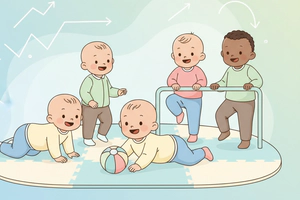
Use of Orthotics and Assistive Devices in Pediatric Rehabilitation: Guide to Child Orthotics, AFO Use, DAFO, and Walking Devices
The goal in pediatric rehabilitation is to increase the child’s mobility, balance and posture, daily living independence, and participation (home, school, play). In this process, the use of orthotics and assistive devices plays as important a role as exercise, manual therapy, neurodevelopmental approaches, and play-based activities. This is because when muscle tone (spasticity/hypotonia), joint stability, ankle control, or balance is insufficient in some children, a correctly selected device gives the child the opportunity to “move more safely and efficiently.”
The questions parents ask most frequently are usually: “When are child orthotics used?”, “Does AFO use make muscles lazy?”, “What is DAFO, how is it different from AFO?”, “Which of the pediatric walking devices is suitable for us?”, and “How should orthopedic shoes be selected?”. In this article, from a pediatric rehabilitation perspective, we will address the purposes of these devices, selection criteria, safe usage tips, and how they are integrated with physiotherapy step by step. Remember: The information here is general; the most accurate plan is made by the physiotherapist and the relevant physician/orthotist-prosthetist based on the child’s evaluation.
What do orthotics and assistive devices provide? (Purposes and benefits)
Physiotherapy assistive devices and orthotics are not a “treatment” on their own; they are tools that accelerate rehabilitation and increase the child’s function when used with the right goal. Their main purposes are grouped under the following headings:
1) Improving alignment and stability
Especially in children struggling with ankle and knee control, a suitable orthosis can bring the joint into better alignment, providing more balanced stepping, a more symmetrical gait, and safer standing. For example, if the ankle collapses inward (pronation) or outward stepping increases, the orthosis can support this line.
2) Improving energy efficiency and walking quality
Some children get very tired while walking because they seek extra balance with every step, and muscles work harder than necessary. With the right device, energy consumption may decrease, and walking can become more fluid. This contributes to the child staying active for longer periods at school or the park.
3) Safety: reducing the risk of falling
In children with balance problems, pediatric walking devices (walkers, gait trainers, etc.) or appropriate orthotics can reduce the frequency of falls. This increases the child’s confidence in moving.
4) Managing the risk of contracture and deformity
In some cases (e.g., spasticity, loading in the wrong position for a long time), restrictions may develop in the joints. Orthotics can help reduce this risk when used with proper positioning and stretching principles.
Note: The orthosis/device goal is not the same for every child. For some children, the goal is “walking more independently,” while for others, it may be “safer transfer” or “better posture.”
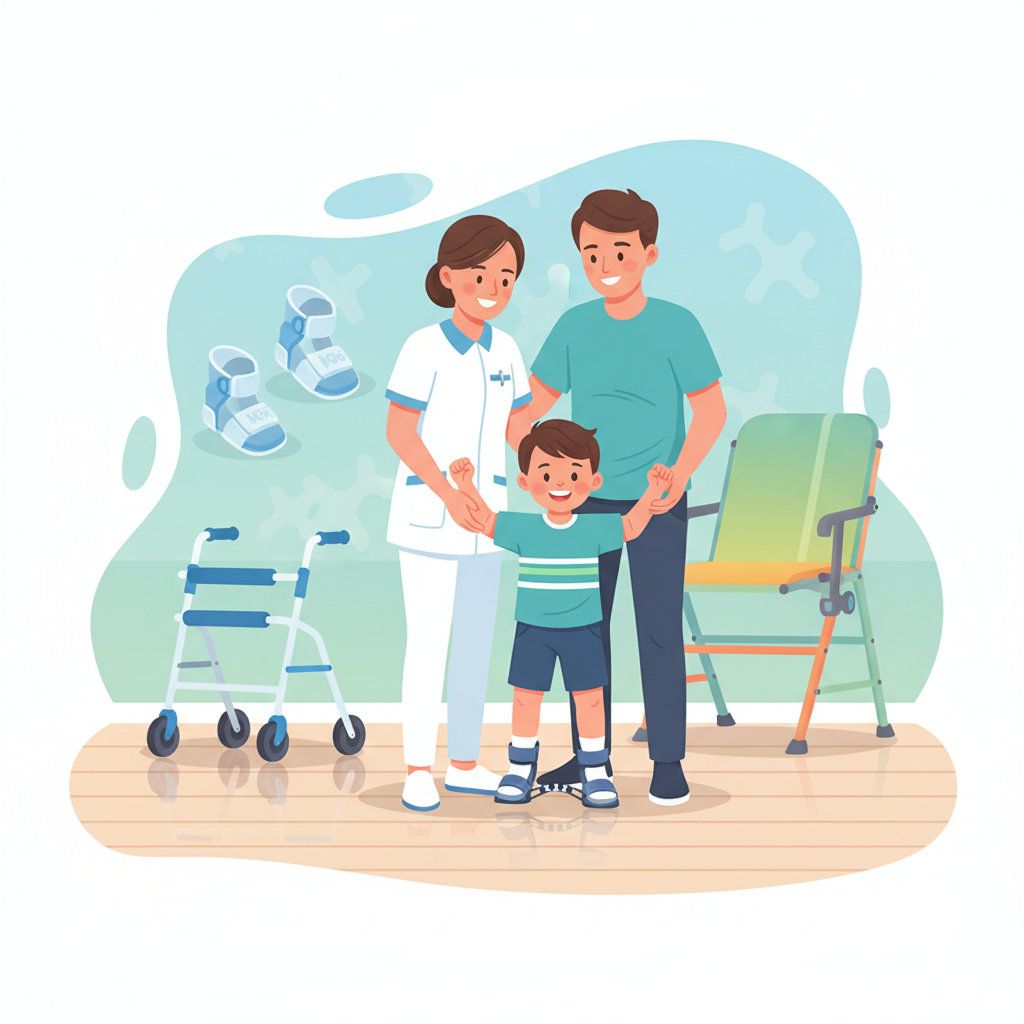
Child orthotics: AFO use, what is DAFO, which one to choose in which situation?
Child orthotics are most commonly used in the lower extremity to support the foot-ankle-knee line. The most well-known are AFO and DAFO; however, there are different options like SMO/FO. Selection should be made based on the child’s functional need rather than the diagnosis.
What is an AFO? In which situations is AFO use recommended?
AFO (Ankle-Foot Orthosis) is a type of orthosis that supports the ankle and foot. Common areas of use:
- Ankle instability and difficulty in control
- Tendency for hyperextension in the knee (knee mechanics can be affected by some AFO designs)
- Some children with a tendency to toe walk (evaluation is absolutely necessary)
- Wrong stepping patterns due to spasticity
- Difficulty standing/walking with low tone (hypotonia)
AFO use is generally planned to increase walking quality, ensure the foot is placed more continuously during stepping, and increase safety.
Gradual acclimatization plan (example)
Every child is different; however, a gradual increase works for many children:
- Days 1–3: 30–60 min indoors (with activity)
- Days 4–7: 1–2 hours
- Week 2: 2–4 hours (according to school/home routine)
- Ongoing: The physiotherapist determines the total time based on the goal (all day for some children, during specific activities for others)
Skin check and safety tips
- Check the skin every time you take it off during the first weeks.
- Slight redness can be normal; however, consult a specialist for redness that lasts longer than 20–30 minutes, blisters, bruises, or leads to an open wound.
- Appropriate socks (seamless/sweat-absorbent) and correct shoe fit reduce the risk of pressure.
What is DAFO? Difference between AFO–DAFO
What is DAFO? DAFO (Dynamic Ankle Foot Orthosis) is an orthosis approach that aims for sensory feedback and better foot alignment in some children, generally providing more contact with the foot through a thinner/more “hugging” design. The AFO–DAFO difference varies according to the child’s need; in some children, a DAFO better “reminds” the foot position, while in others, a more rigid AFO design may be necessary. What is critical here is the joint evaluation of the child’s muscle tone, joint range of motion, walking pattern, and targeted function.
Other options like SMO/FO (short guide)
- SMO: Shorter support around the ankle; can be considered for foot alignment and moderate stability needs.
- FO (insoles/foot orthosis): Mostly for the arch of the foot and stepping pattern; it is not an automatic solution for every “flat foot” case, evaluation is required.
Important: The approach “the strongest orthosis is the best” is not correct. An orthosis that restricts more than necessary can reduce movement experience. But an option that is too soft may not meet the goal either.
Pediatric walking devices: Walker or gait trainer? Posterior vs. anterior difference
Pediatric walking devices support the child in standing safely, taking steps, and interacting with the environment. The most common options are: walker, posterior walker, anterior walker, gait trainer, and in some cases, supports like canes or crutches.
Anterior walker vs posterior walker
- Anterior walker (front): The child pushes the walker in front of them. It might be more understandable for some children at the beginning; however, it can make posture difficult for those with a tendency to lean forward.
- Posterior walker (rear): The walker stays behind the child; it can encourage the child to hold their trunk more upright. It provides advantages to some children in terms of posture control and step pattern.
The answer to the question “Posterior walker or anterior walker?” is determined by the child’s trunk control, balance strategies, and safety needs.
When is a gait trainer needed?
A Gait trainer is a system that can offer more support (trunk, pelvis, sometimes arm supports) compared to a walker. It is generally preferred if:
- Trunk/pelvis control is insufficient
- The risk of falling is high
- Initiating a step is very difficult
- Safe practice for a longer duration is targeted
Adjustment and safety: small details make a big difference
- Height adjustment: Should be adjusted so that shoulders are not pulled up and elbows are slightly bent (varies by model).
- Brake/wheel adjustment: A device that slides too fast increases the risk of falling.
- Home-school scenario: Narrow spaces at home and long corridors at school create different needs. If possible, device selection should be trialed according to these environments.
These devices should not be unnecessarily postponed out of fear that “they cause dependency.” When used with the right goal and proper follow-up, the aim is for the child to experience more movement and become more independent over time.
At this point, the content Role of Physiotherapy in Cerebral Palsy (CP) Rehabilitation can also provide a general framework for neuromotor factors affecting walking patterns.
Orthopedic shoe selection: How should shoes compatible with orthotics be?
The subject of “orthopedic shoe selection” comes up especially with AFO use or orthotics like DAFO. The main goal here is the correct positioning of the orthosis inside the shoe, the child’s foot being comfortable, and reducing the risk of pressure.
Practical checklist for AFO/DAFO compatibility
The following features make your job easier when choosing shoes:
- Wide toe box and sufficient internal volume: Prevents squeezing with the orthosis.
- Removable insole: Increases internal volume and allows the orthosis to sit better.
- Rigid heel counter (supported heel area): Helps the foot stay stable from behind.
- Easy open-close system: Velcro or a wide-opening lacing system makes it easier to put on and take off with the orthosis.
- Non-slip sole: Important for safety.
Common mistakes
- The “let’s buy one size bigger, it will manage” approach: Oversized shoes can cause the foot to slip and lead to pressure points.
- Very soft/unformed heel: Can reduce stability with the orthosis.
- Narrow fit: Can cause redness, friction, and refusal to use.
Shoe compatibility with the orthosis plays a critical role in the child accepting the device. If your child constantly wants to take off the shoes, walking deteriorates significantly, or skin problems occur, re-evaluation is needed.
The article How to Identify Balance and Coordination Problems in Children? can also be helpful to support device and shoe compatibility in children with balance and coordination needs.
Is an orthosis enough on its own? Integration with physiotherapy assistive devices and follow-up
The situations where orthotics and assistive devices give the best results are when they are integrated into the physiotherapy program. That is, the goal is not to “put it on and wait”; it is to use the device to serve the child’s functional goals.
Orthosis + exercise + functional training
- Functional practices such as standing balance, taking steps, stairs, and sit-to-stand can be planned with AFO/DAFO.
- If necessary, barefoot and orthosis activities are balanced to support muscle activity and motor learning (the plan should be specific to the child).
- A play-based approach increases motivation. You can check out the content Combining Play Therapy with Physiotherapy: How Do Children Heal? on this subject.
Follow-up frequency: growth and development change the plan
Children grow fast. Therefore:
- The orthosis may start to become “small in a short time.”
- The height adjustment of the walking device may change.
- As motor skills develop, the need for the device may decrease, or it may be necessary to switch to a different model.
When is professional evaluation required?
- Wounds, blisters, bruising on the skin
- New onset of pain or limping
- Increase in frequency of falls
- Significant deterioration of walking with the device
- The child constantly refusing the device (could be fit, comfort, wrong goal, or wrong sizing)
Frequently Asked Questions (Short answers)
How many hours should an AFO be worn?
There is no single correct answer. The duration of AFO use is increased gradually according to the goal, the child’s tolerance, and skin response. Your physiotherapist should determine the plan.
Does an orthosis make muscles lazy?
Orthotics selected incorrectly or used for wrong durations can reduce movement experience in some children. However, when used with the right goal, for the right duration, and with exercise, an orthosis supports development by enabling the child to move with better quality.
How long is redness considered normal?
Slight redness should pass in a short time (within approximately 20–30 mins). Consult a specialist for redness that lasts longer or worsens.
Does a walker make the child dependent?
If the goal is set correctly, it usually provides more practice and safe movement, not “dependency.” Over time, the device’s support can be reduced, or a switch to a different model can be made.