Physiotherapy Process in Brachial Plexus (Birth Palsy) Injuries: A Comprehensive Guide from Diagnosis to Home Exercises
Noticing that your baby moves one arm less than the other, especially if it happened immediately after birth, can be very worrying for families. This situation can sometimes be related to brachial plexus injury (commonly known as “birth palsy”). Most questions like “What is the brachial plexus?”, “how is birth palsy treatment done?”, or “does arm palsy improve with physiotherapy?” actually point to a single need: Taking the right step at the right time for my baby.
In this article, we will address the physiotherapy process in brachial plexus (birth palsy) injuries step by step. We will detail which symptoms are important, common types like Erb-Duchenne palsy, goals and timelines in brachial plexus rehabilitation, safe birth palsy exercises, and play-based suggestions that can be done at home. We will also provide general answers to critical questions such as “When should I see the doctor again?” and “when is brachial plexus surgery necessary?”.
Note: This content is for informational purposes. The most accurate plan for your baby’s condition is created through evaluation by a pediatric physiotherapist and relevant physicians.
What is the Brachial Plexus? How Does Birth Palsy Occur?
The brachial plexus is the name of the nerve network that starts from the neck, passes through the shoulder, and extends to the arm, hand, and fingers. This nerve network manages the movements of the shoulder, elbow, wrist, and fingers, as well as the sensation of the arm. The simplest answer to the question “What is the brachial plexus?” can be thought of as: A network formed by the main nerve cables that operate the arm.
during birth, these nerves may be stretched, damaged, or more rarely, severe damage like rupture/avulsion may occur. One of the most common risk factors is known as shoulder dystocia (the baby’s shoulder getting stuck in the birth canal). During this, the pulling force applied to the baby’s shoulder area can affect the nerves. However, a distinct risk factor may not be seen in every birth palsy case.
The symptoms most frequently noticed by families are:
- The baby moving one arm less or not lifting it at all
- Distinct asymmetric posture in the shoulder and elbow
- The arm staying close to the body, turned inward (typical in some types)
- Changes in the grasp reflex (not present in every case)
- Restlessness/crying during passive movements of the arm (may indicate pain or sensitivity)
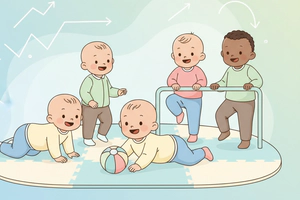
In the early period, the goal is not just to “put a label on it,” but to preserve range of motion, prevent secondary problems with correct carrying-positioning, and guide the brachial plexus physical therapy process as early as possible. At this point, knowing the general motor development stages of the baby is also a good guide for the family. You can also take a look at this article on the subject: 0-12 Month Baby Motor Development Stages and Supportive Games
Types of Birth Palsy: Erb-Duchenne Palsy and Others (What Does Severity Change?)
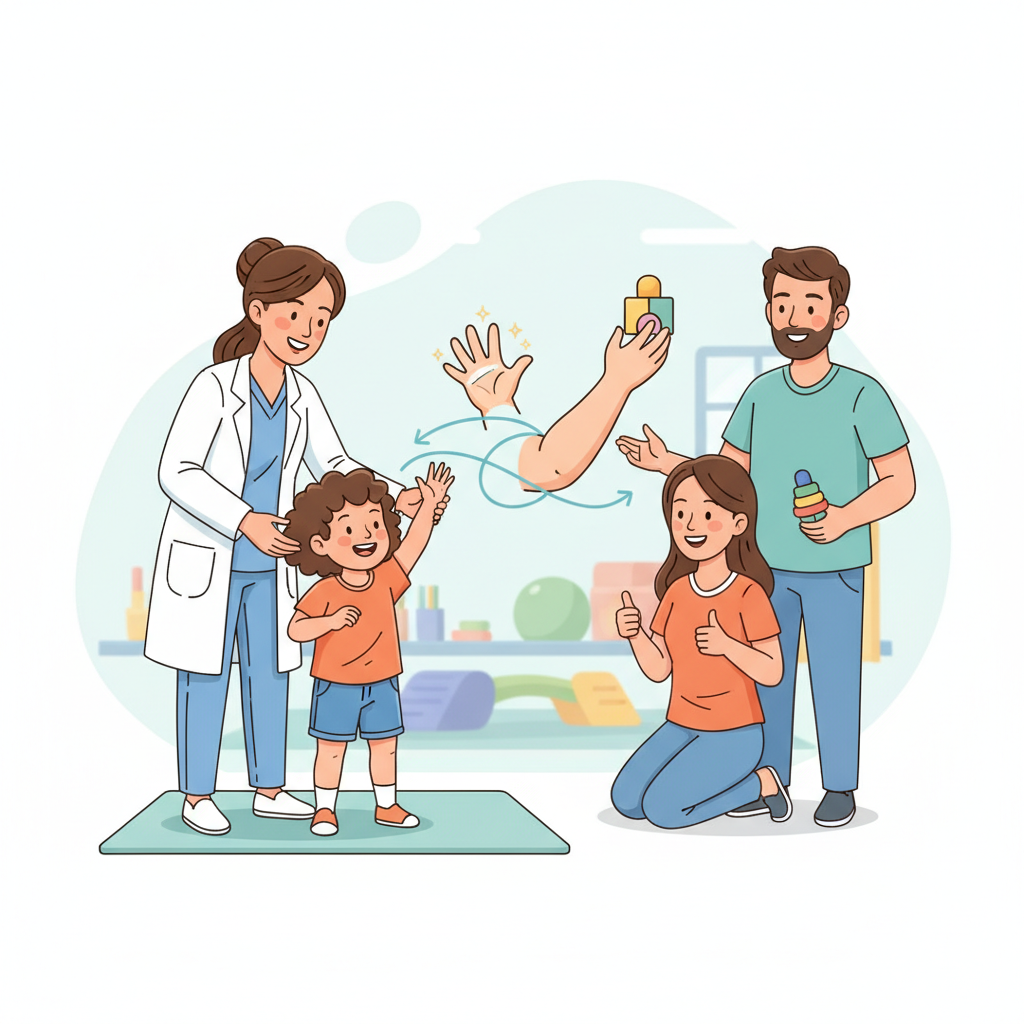
Birth palsy is not a single type. Symptoms, recovery speed, and the brachial plexus rehabilitation plan can change depending on the level at which the nerves are affected. One of the terms you will hear most frequently in clinical practice might be Erb-Duchenne palsy (Erb palsy).
Erb-Duchenne Palsy (C5–C6) – The most common type
In this type, shoulder abduction (lifting the arm to the side), shoulder external rotation, and elbow flexion (biceps) are usually affected. The baby may keep the arm mostly close to the body; the shoulder may turn inward. Hand and finger movements are often better preserved.
Total Brachial Plexus Involvement (C5–T1)
Shoulder, elbow, wrist, and hand functions may be more broadly affected. In this case, rehabilitation requires more intensive and close monitoring.
Klumpke Type (Lower Trunk)
It is rarer; hand and finger functions may be more significantly affected.
Horner’s Sign (Important Warning Sign)
If findings such as drooping of the eyelid and constriction of the pupil (Horner syndrome) accompany the condition, this may suggest a higher level/more complex involvement and requires priority specialist evaluation.
What does severity change?
- The goals remain the same (range of motion, symmetry, functional use), but the frequency of follow-up, the content of the home program, and sometimes the likelihood of surgical evaluation may change.
- While recovery can be faster in mild stretches, severe injuries may require longer-term arm palsy physiotherapy and multi-disciplinary monitoring.
Brachial Plexus Rehabilitation: Physiotherapy Process Timeline (0–12 Months)
One of the questions families search for most is: “When does birth palsy physiotherapy start?” The general approach is to refer to pediatric physiotherapy in the earliest possible period (often within the first weeks) following physician evaluation. Because the early period is critical for preventing joint stiffness and incorrect usage habits.
The timeline below offers a general roadmap for brachial plexus rehabilitation:
0–4 Weeks: Protection, positioning, and family education
Goals
- Preserving range of motion in the shoulder, elbow, wrist, and hand
- Gentle approaches to reduce pain/sensitivity
- Teaching the family safe carrying, dressing, and positioning
Practical Tips
- It can be beneficial to hold the affected arm close to the body and supported while carrying the baby so the arm doesn’t “dangle freely.”
- Appropriate technique for dressing (usually dressing the affected arm first and taking it out last when undressing) can be recommended.
1–3 Months: Stimulating active movement and increasing symmetry
Goals
- Increasing the baby’s awareness of the affected arm and active participation
- Meeting at the midline with play, using two hands together
- Supporting scapula/shoulder girdle control
Why is follow-up important in this period? Because “signs of recovery” become more visible. Families usually observe changes such as small movements in the shoulder, attempts to bend the elbow, or efforts to reach for a toy as “brachial plexus recovery signs.”
3–6 Months: Progress focused on functional use and strengthening
Goals
- Shoulder stability, controlled reaching, weight bearing
- Playing with two hands, skills like grasping-releasing
- Evaluation of supports like splints/orthoses if necessary (by physician/physiotherapist decision)
What does “birth palsy not improving in 3 months” mean? Every baby is different; however, some clinical indicators (e.g., return of specific muscle functions) are monitored more closely. If progress is limited, the team may request a surgical opinion to evaluate the question when is brachial plexus surgery necessary.
6–12 Months and beyond: Fine motor, coordination, and daily living skills
Goals
- Integration of the arm into daily life (reaching, holding, playing with two hands)
- Reducing the risk of restriction/contracture in the shoulder
- Supporting fine motor skills and hand usage
In this period, hand function and bilateral use directly affect the child’s independence. If needed, occupational therapy support can also be very valuable: Occupational Therapy in Children: How Do Daily Living Skills Develop?
Arm Palsy Physiotherapy and Home Program: How Should Safe “Birth Palsy Exercises” Be?
The home program multiplies the effect of sessions held in the clinic. However, the critical point here is this: Exercises must be planned specifically for the baby. Nevertheless, we can share safe and general principles to guide families.
Basic “Do/Verify” list to watch out for at home
- If there is pain and restlessness, do not force it; movements should be gentle and short.
- Avoid “tugging” style movements on the shoulder joint.
- Short repetitions spread throughout the day are generally better tolerated.
- Choose times when the baby is awake and calm (not immediately after feeding).
Play-based “arm movements in babies” suggestions (general)
These suggestions are among the practical practices most useful for families looking for “arm movements in babies”; the aim is to turn exercise into play:
- 0–3 months: Midline meeting games (bringing two hands together over the chest), sensory stimulation with soft textures, gentle support to the shoulder girdle during short tummy time sessions.
- 3–6 months: Offering a toy at the midline to encourage holding with two hands, positioning in side-lying to bring the affected arm forward, reaching games.
- 6–12 months: Holding large blocks with two hands, putting toys in and out of a box, games supporting weight shifting during creeping/crawling.
If you want to support fine motor and hand usage at home, this article is also a good supplement: What Are Fine Motor Skills? How to Develop Them at Home?
Common mistakes made by families
- Over-forcing with the thought “the more I force it, the faster it will heal”
- Allowing the arm to stay in the same position constantly, paving the way for joint restriction
- Focusing only on “making them do movements” and neglecting functional use and play
When is Priority Evaluation Needed? (Red Flags) + FAQ
In some cases, it is important to consult a pediatrician and relevant specialists (Pediatric Neurology, Orthopedics, Plastic Surgery, PM&R) without waiting. The following situations may require “priority evaluation”:
- The arm remaining completely motionless or movement gradually decreasing
- Significant impairment in finger/hand functions, significant sensory unresponsiveness
- Suspicion of Horner’s sign (eyelid drooping, etc.)
- Severe restlessness, excessive crying upon touch (suspicion of fracture/other injury)
- Lack of significant functional progress around the 3rd month (general warning; evaluated via physician/physiotherapist follow-up)
Frequently Asked Questions
Does birth palsy go away completely? It changes according to the type and severity of the brachial plexus injury. While rapid and significant recovery is seen in some babies, others may require longer-term follow-up and brachial plexus physical therapy.
How many months does brachial plexus take to heal? There is no single answer to the question “How many months does brachial plexus take to heal?”. Recovery depends on the degree of nerve damage, early intervention, a regular home program, and accompanying problems. Therefore, the process is re-evaluated at certain intervals.
How many times a day should birth palsy home exercises be done? Short play/activity blocks spread throughout the day are preferred, depending on the baby’s tolerance. A pediatric physiotherapist’s plan is needed for the exact number and content.
When is brachial plexus surgery necessary? This decision is made by the specialist team based on clinical examination findings and the course of recovery. Surgical options may come up for some babies; therefore, regular follow-up is critically important.
Which doctor should be visited? Usually, the pediatrician performs the initial evaluation; subsequently, a multidisciplinary follow-up with PM&R (Physical Medicine and Rehabilitation), pediatric orthopedics, plastic surgery, and/or pediatric neurology can be planned.