How to Detect Balance and Coordination Problems in Children? (Symptoms, Causes, and Home Observation Guide)
Does your child fall frequently, have trouble changing direction while running, or lag behind peers in ball games? Many families interpret these situations as “childhood clumsiness” and think it will pass with time. However, although balance and coordination development progresses at different speeds in every child, some signs may require evaluation for balance problems in children or coordination disorders in children. The critical point here is the consistency of the clumsiness, its severity, and how much it affects the child’s daily life (play, school, self-care).
In this article, we will address the question “How to understand balance and coordination problems in children?” with tips parents can observe at home, red flags by age, and safe suggestions. We will also explain concepts such as what is motor planning skill, what is dyspraxia, and how they relate to coordination in simple language. Remember: This content is prepared for awareness and proper guidance, not for diagnosis; in case of doubt, consulting a pediatrician and pediatric rehabilitation team is the most correct step.
What are Balance and Coordination? (The Child’s Movement “Alphabet”)
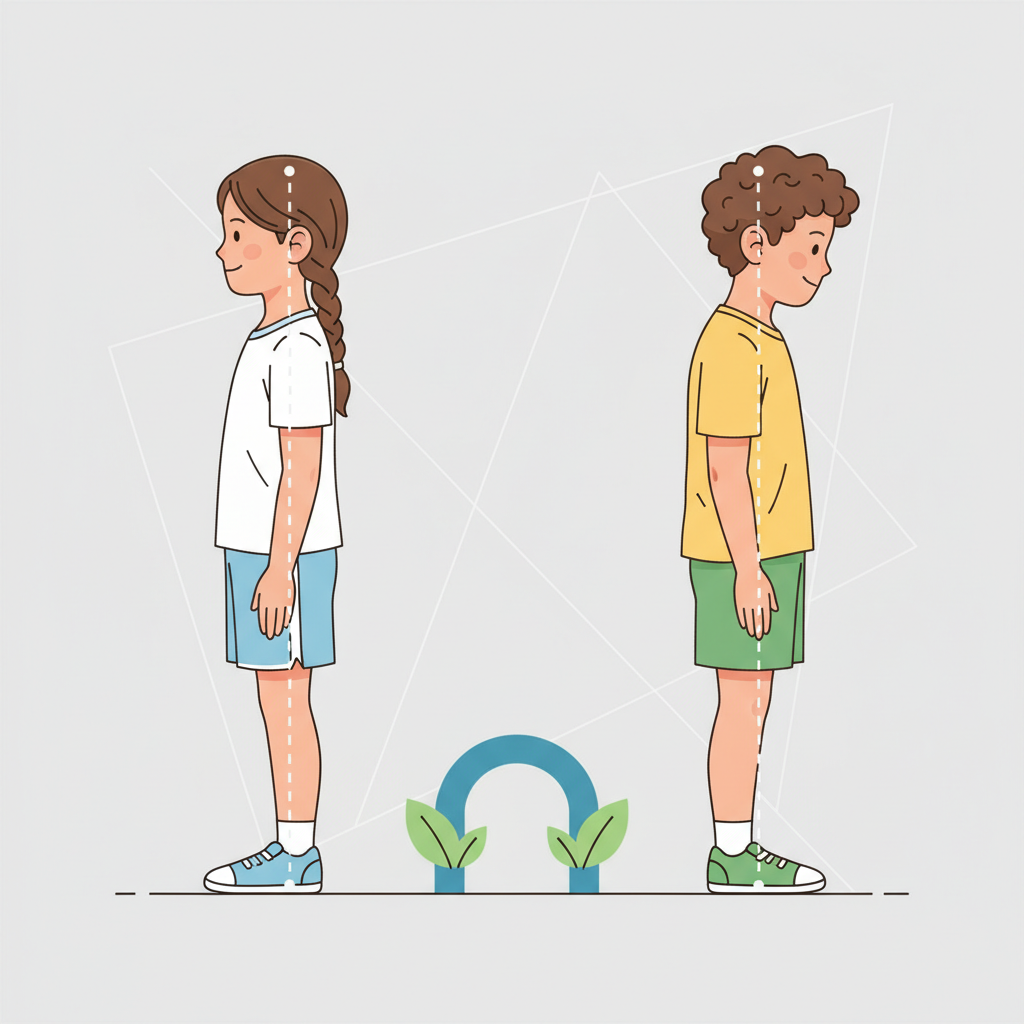
Balance and coordination are two fundamental skill areas that work together for a child to manage their body safely and effectively. Balance is the body’s ability to maintain its posture against gravity; coordination is the ability to use different muscle groups in the correct order, at the right time, and with the right force.
Types of balance: Static, dynamic, and vestibular
- Static balance: The child maintains balance while stationary (standing on one foot, sitting upright in a chair).
- Dynamic balance: Maintains balance while in motion (running, jumping, going up and down stairs, sudden changes of direction).
- Vestibular balance: Related to the vestibular system in the inner ear processing information about movement and head position. Tolerance to stimuli such as swinging on a swing, spinning, and acceleration-deceleration is important here.
The equivalent of coordination in daily life
Coordination is not just about sports. It also includes:
- Hand-eye coordination: Catching a ball, throwing at a target, writing.
- Bilateral coordination: Using scissors, jumping rope, buttoning.
- Rhythm and timing: Hopscotch, dancing, adjusting tempo while running.
Therefore, complaints like “my child can’t catch a ball” or “struggles on stairs” can sometimes indicate a need for support in the area of balance and coordination.
When is Clumsiness Normal, and When is it Not?
Every child’s development speed is different; growth spurts, adjusting to a new environment, fatigue, or distraction can cause periodic clumsiness. However, some situations exceed the limit of “normal variation” and should be monitored carefully for symptoms of balance problems in children.
Examples of situations considered normal
- Difficulty in the first weeks when learning a new skill (bicycle, scooter, roller skates).
- Short-term “clumsiness” during periods of rapid growth (especially between ages 6–10).
- Temporary loss of coordination in crowded/stimulus-intense environments.
Signs that could be “Red Flags”
If the following symptoms are frequent and distinct, an evaluation for coordination disorder in children should be considered:
- Frequent falling/bumping: Distinct, recurring falls in daily routine.
- Difficulty with stairs: Inability to establish a rhythm on steps, fear, inability to descend without holding on.
- Inability to stand on one foot: Distinct difficulty compared to peers.
- Avoidance of ball games: Distinct difficulty in ball catching/throwing skills.
- Difficulty learning new movements: A feeling of “they can’t do it even when shown”.
- Quick fatigue and low self-confidence: Not participating in games, saying “I can’t do it”.
- Difficulty in daily living skills: Dressing, buttons, zippers, tying shoelaces.
Short checklist by age (practical guide)
- 2–3 years: Frequent falling, being very unsteady while running, inability to overcome simple obstacles.
- 4–5 years: Inability to stand on one foot even briefly, inability to participate in simple ball games.
- 6–7 years: Difficulty in stair rhythm, distinct lag in games like jump rope/hopscotch.
- 8+ years: Constantly lagging behind in physical education, inability to learn to ride a bike, avoiding sports.
These items do not mean a diagnosis on their own; however, if there is “consistency + loss of function”, it is a strong sign for evaluation.
The Relationship Between Motor Planning Skills, Dyspraxia, and Coordination Disorder
One of the questions parents frequently ask is: “Is my child clumsy, or do they have dyspraxia?” At this point, understanding the concept of motor planning skill is very helpful.
What is motor planning skill (praxis)?
Motor planning involves the steps of ideation, planning, execution, and correction with feedback before performing a movement. For example, in a game of “jump and stay balanced on the line”, the child:
- Understands what to do,
- Plans how to position their body,
- Executes the movement,
- Makes corrections if they are about to fall.
When motor planning is weak, the child may appear as if they “know what to do but cannot do it”.
What is Dyspraxia?
What is dyspraxia? Simply put, it is a condition accompanied by difficulty in motor planning and organizing movement. It can be noticed in a child as follows:
- Distinct difficulty in learning new movements (e.g., riding a bike, swimming stroke).
- Falling apart in multi-step tasks (e.g., getting dressed order gets mixed up).
- Problems with the fluidity of movement (stiff, “robotic”, or excessively slow movement).
- Frequent clumsiness, knocking things over, bumping into people in crowds.
When dyspraxia turns into a picture that affects daily life, it can also be associated with the concept of developmental coordination disorder (DCD in some sources) in children. Professional evaluation is required for diagnosis and distinction.
Is it the same as coordination disorder?
“Coordination disorder” is a broader term among the public. Dyspraxia emphasizes the motor planning and movement organization side specifically. Many factors such as balance problems in children, sensory processing differences, and muscle tone can affect coordination. Therefore, instead of looking for a “label”, it is more important to identify the functions the child struggles with and create the right support plan.
At this point, sensory processes may also come into play. For sensory difficulties related to balance and movement, this article may be useful: Symptoms of Sensory Processing Disorder and Treatment Methods.
Safe Home Observation + Balance Exercises: What Can You Try?
The following suggestions can be thought of as a “mini home screening”: The aim is not to diagnose, but to see difficulties in the area of symptoms of balance problems in children and coordination more clearly and to take notes. Focus on your child’s own progress rather than comparing them.
Safety warning: Do not perform these trials in cases of dizziness, fainting, sudden loss of strength, severe pain, or new-onset distinct limping; consult a health professional.
6 practical items for home observation
- Standing on one foot: Try separately on the right/left foot. Do they open their arms wide? Do they fall immediately?
- Walking on a line: Make a straight line on the floor with tape. Do they deviate a lot from the line?
- Stairs rhythm: Do they always use the same foot when going down/up, are they afraid, is the need to hold on distinct?
- Ball catching/throwing: Try a soft ball from a close distance. Do they look away, can they not establish timing?
- Changing direction: Is there frequent falling in the “stop–turn–come” game while running?
- Dressing skills: Is planning difficult in steps like buttons/zippers/shoes?
Taking notes on these observations for 1–2 weeks provides very valuable information when you go to a specialist.
Safe balance exercises applicable at home (in game format)
The suggestions in this section are child-appropriate and low-risk options for families looking for “balance exercises”:
For ages 3–5
- Animal walks: Bear walk, frog jump (short distance).
- Pillow island game: Placing pillows on the floor and “crossing from island to island”.
- Game with balloon: Walking without dropping the balloon (slow tempo).
For ages 6–9
- Hopscotch variations: Single foot–double foot transitions.
- Throwing ball at target: Throwing into a basket/bucket from different distances.
- Obstacle course: Going around a chair, jumping over a line on the floor (pay attention to home safety).
For ages 10+
- Rhythm and timing studies: Stepping with a metronome/clapping rhythm.
- Balance + dual task: Simple counting game while walking on a line (simplify if they struggle).
- Coordination ladder alternative: Making boxes on the floor with tape and doing step sequences.
The aim of the exercises is not to “force”; it is to offer quality repetition to the nervous system at the right level, with short duration and regular practice. If the child’s motivation drops, reduce the time and make the game easier.
When should you consult a specialist?
Professional evaluation is a good idea in the following situations:
- If symptoms last longer than 3 months and progress is limited.
- If participation in school physical education/games is distinctly affected.
- If the child says “I can’t do it” and avoids it, and self-confidence drops.
- If frequent falling leads to injury.
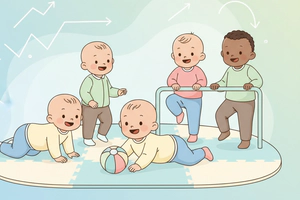
In the evaluation process, branches such as pediatric physiotherapy, occupational therapy, and pediatric neurology when necessary can work together. For the connection between daily living skills and coordination, this content might also be useful: Occupational Therapy in Children: How Do Daily Living Skills Develop?. Also, knowing early motor development stages provides a framework for the question “is it normal?”: 0-12 Month Baby Motor Development Stages and Supportive Games.
Frequently Asked Questions (FAQ)
At what age is coordination disorder detected?
Some signs can be noticed at 3–4 years old; however, as tasks like physical education, writing, and using scissors increase with the school period (6–7 years old), coordination disorder in children becomes more visible. The important thing is not the age, but that the difficulty affects daily life.
Does dyspraxia get better?
Dyspraxia may not be a condition that “goes away instantly”; but with proper evaluation, goal-oriented therapy, and a regular home program, significant improvements can be seen in children’s skills. The key here is; a plan suitable for the child’s needs, family-school cooperation, and sustainable practices.
Is clumsiness in children caused by vitamin deficiency?
Clumsiness cannot always be attributed to vitamin deficiency. Balance and coordination are affected by many factors such as sensory systems, muscle tone, motor planning, visual perception, attention, and experience. If you suspect nutrition, the safest approach is to talk to a pediatrician and get the necessary evaluations done.
How long do balance exercises take to work?
This depends on the level of the child’s difficulty, the suitability of the exercises, and regularity. Generally, small improvements can be seen within weeks; regular repetition and the right level are important for permanent gains. If there is no progress despite home trials, professional support speeds up the process.